Vintage Tiny French Toile Digital Papers: A Versatile Tool for Creative and Professional Workflows
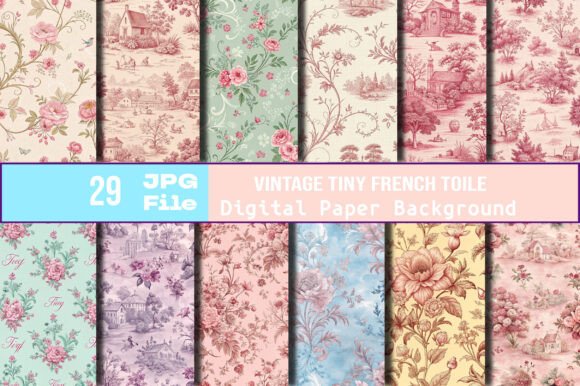
Vintage Tiny French Toile Digital Papers offer a unique blend of charm, quality, and functionality that makes them an excellent addition to both personal and professional creative projects. These digital paper designs are rooted in the classic French toile pattern—featuring small, intricate motifs on a subtle background—but modernized with vibrant colors like pink, teal, orange, and yellow. Each design is created as a seamless file, allowing for effortless tiling without compromising visual appeal or resolution.
Understanding the Role of Seamless Digital Papers in Design Work
In today’s fast-paced digital world, having access to high-quality, versatile assets can significantly streamline your workflow. Vintage Tiny French Toile Digital Papers fit into this space by serving as a ready-to-use background element across various applications. Their seamless nature means they can be repeated infinitely, making them ideal for large-scale prints such as banners, posters, or custom wallpaper. This eliminates the need for tedious editing or patching, saving valuable time while maintaining aesthetic consistency.
Why Seamless Matters
The term "seamless" refers to a design that can be tiled repeatedly without visible edges or breaks. For creators who work with grids, layouts, or require expansive backgrounds, this feature is crucial. It ensures that whether you’re designing a 12 x 12 inch scrapbook page or scaling up for home decor, the pattern remains uniform and visually pleasing. The files included in this product are all 300 dpi JPEGs, which guarantees clarity and sharpness when printed or displayed digitally.
Preparation and Integration Tips for Smooth Use
Before diving into a project using these digital papers, it’s important to understand their intended use and how they align with your goals. Here are some practical tips to help you integrate them effectively:
- Organize Your Files: Extract the zipped folder and sort the images based on color or motif if you plan to mix and match later.
- Test Print Settings: Since colors may vary slightly depending on screen and printer settings, print a test sample before finalizing any physical output.
- Use RGB for Digital Displays: These files are optimized for digital use in RGB format, so ensure your platform supports this color profile for accurate representation.
- Pair with Compatible Assets: Look for matching clipart sets in the same shop to maintain a cohesive look across your designs.
Whether you're a hobbyist creating handmade cards or a business owner designing packaging materials, thoughtful preparation will help you maximize the value of these vintage-style patterns.
Applications Across Different Projects and Industries
Vintage Tiny French Toile Digital Papers are not limited to one type of use case. Their adaptability allows them to enhance a wide range of creative outputs. Below are several examples of where and how they can be applied:
Scrapbooking and Paper Crafts
For scrapbooking enthusiasts, these papers provide a delightful way to add texture and style to pages. Their bright, cheerful colors make them perfect for highlighting key memories or journal entries. Because each file is square (12 x 12 inches), they easily fit into standard page layouts. You can also layer them with other papers or elements from your collection to build depth and interest.
Home Decor Projects
When working on DIY home decor items like wall art, table runners, or fabric coasters, these digital papers can serve as a base design. Using a home printer with suitable paper stock or even a local print shop, you can transform these patterns into tactile pieces that reflect your personal style. The vintage feel complements farmhouse, shabby chic, or bohemian interiors especially well.
Small Business Marketing and Packaging
Entrepreneurs and small business owners can leverage these designs to create branded packaging materials that stand out. From gift wrap to shipping labels, the tiny French toile motifs add a touch of elegance and nostalgia. They also pair beautifully with handwritten notes or logos, helping to build a consistent brand identity. When used for marketing materials like social media graphics or email headers, the seamless format allows for easy resizing and repetition without distortion.
Wallpaper and Wrapping Paper
These papers can double as decorative wallpaper for laptops, tablets, or mobile devices. Their compact size and repeating pattern make them easy to adjust for different screen resolutions. Similarly, they can be printed as wrapping paper for gifts, invitations, or seasonal décor. The ability to tile seamlessly ensures there are no awkward cuts or overlaps when using them for larger surfaces.
Workflow Examples and Real-World Scenarios
Let’s walk through a few real-world scenarios to see how Vintage Tiny French Toile Digital Papers can be implemented efficiently:
- Designing a Scrapbook Layout: Start by selecting a base paper from the set that matches your theme. Import it into your design software, then overlay photos, journaling, and coordinating clipart. Adjust the layout for balance and print at high resolution for lasting quality.
- Creating Custom Packaging for a Boutique: Choose a bold color like teal or yellow to represent your brand. Use the pattern as a backdrop for shipping tags or gift boxes. Add text or logos using transparent layers to preserve the vintage aesthetic while ensuring readability.
- Enhancing Social Media Graphics: Apply a subtle toile pattern as a background for Instagram posts or Pinterest pins. Pair it with minimalist typography and relevant imagery to keep the focus on your message while adding visual warmth.
Each of these workflows benefits from the ease of access and scalability provided by these digital assets. By incorporating them early in the planning phase, you can maintain visual continuity throughout your project lifecycle.
Quality Control and Long-Term Usability
While the primary benefit of these papers is their aesthetic appeal, their technical specifications play a major role in long-term usability. At 3600 x 3600 pixels and 300 dpi, they support high-resolution printing, which is essential for professional results. However, always verify compatibility with your chosen design software and printer to avoid unexpected issues.
Another factor to consider is color accuracy. Monitors and printers interpret colors differently, so what looks pastel pink on your screen might appear more vivid in print. Testing with actual output is recommended for critical projects. Additionally, storing the files in an organized digital folder will help you locate the right pattern quickly when needed.
Combining with Other Tools and Resources
These digital papers work best when integrated with complementary tools and resources. For instance, using them alongside vector-based design software like Adobe Photoshop or Canva allows for greater flexibility in layering and editing. If you're working on print projects, pairing them with bleed-aware templates can prevent alignment errors during production.
You can also enhance their impact by combining them with handwritten fonts, watercolor brushes, or distressed textures. These elements add dimension and character, turning a simple background into a rich, layered composition. Many designers find it helpful to maintain a library of compatible digital assets, including clipart, icons, and textures, to streamline future projects.
Efficiency and Consistency in Creative Processes
One of the most significant advantages of using pre-made digital papers is the efficiency they bring to repetitive tasks. Instead of manually creating a new background for every project, you can pull from a curated set of designs that already align with your style preferences. This reduces decision fatigue and accelerates your creative process.
Consistency is another key benefit. Whether you're producing a series of greeting cards or a line of packaging for a boutique, using the same pattern family helps establish a recognizable visual identity. This is particularly useful for educators or bloggers who want to maintain a cohesive look across multiple content formats or teaching materials.
Practical Observations and Best Practices
Here are a few observations and suggestions to keep in mind when working with these digital papers:
- They are ideal for digital planners and bullet journals when printed as inserts or backgrounds.
- Use them as overlays in photo editing to give images a vintage or whimsical feel.
- They perform well on both light and dark-colored substrates, though testing is advised.
- Consider converting them to PNG format if transparency is required for certain digital projects.
By experimenting with different uses and understanding their limitations, you’ll find the optimal ways to incorporate them into your routine. Think of them as part of your creative toolkit rather than a standalone solution.
Conclusion and Next Steps
Vintage Tiny French Toile Digital Papers are more than just pretty patterns—they are functional, scalable, and adaptable assets that can elevate your creative and business projects. Whether you're preparing for a craft fair, updating your blog visuals, or designing personalized stationery, these papers offer a reliable foundation for your work.
To start using them, simply download the zipped folder and begin exploring the combinations. Try layering with other vintage-inspired elements from the same shop, and don’t hesitate to share your creations online. As with any resource, the more you experiment, the better you'll understand how to apply them effectively within your specific workflow.
Remember, the goal is to enhance your creative process—not complicate it. With careful selection and smart implementation, these papers can become a staple in your design arsenal, offering both inspiration and structure as you move through your next big project.